
Why Your Dealership Website Is Costing You Leads (And How to Fix It)

Last month, I got a call from Tommy, who runs a BHPH lot just outside Atlanta. He was frustrated—spending $3,000 monthly on Google Ads but barely seeing any real leads come through. When I pulled up his website, I immediately knew why.
The site looked like something from 2008. Tiny buttons you couldn't tap on mobile. A contact form buried so deep you'd need a treasure map to find it. Worst of all? It looked nothing like his actual dealership, which was clean, professional, and clearly focused on helping people rebuild their credit.
Tommy's not alone. I've seen this story play out dozens of times with independent dealers and BHPH lots across the country. Great businesses with terrible websites that are literally pushing customers away.
Here's the thing about car buyers today
They're not patient. They won't hunt around your site looking for basic information. And they sure as hell won't struggle with a website that doesn't work on their phone—which, by the way, is how most people are shopping for cars now.
I recently looked at data from over 200 independent dealerships we've worked with. The ones with properly optimized websites? They're converting 3-5% of their visitors into actual leads. The ones still using generic templates or outdated designs? Lucky to hit 1%.
Do the math. If you're getting 1,000 visitors monthly and only converting 1%, that's 10 leads. Bump that conversion rate to 4%, and suddenly you've got 40 leads from the same traffic. At $3,000 profit per deal (assuming you close 1 in 10 leads), that's an extra $90,000 monthly. Just from fixing your website.
The five ways your site is hemorrhaging money
Your mobile experience is broken
I pulled up a dealer's website last week while sitting in a coffee shop. Took nearly 30 seconds to load on my phone. When it finally did, the buttons were so small I couldn't tap them without zooming in. The inventory photos? Forget about it—they looked like postage stamps.
Nearly a quarter of car buyers complete their entire purchase on mobile now. If your site isn't built for phones first, you're essentially telling these customers to shop elsewhere.
Your website looks like everyone else's
Walk into most independent lots, and you'll see personality. The owner's vision, their approach to customer service, their understanding of their market. Then you visit their website, and it's the same generic template used by hundreds of other dealers.
Sarah runs a BHPH lot in rural Tennessee. Her physical location screams "we care about helping people get back on their feet." Her old website? Looked like every other cookie-cutter dealer site. No personality, no connection to her mission of helping people rebuild credit.
After we rebuilt her site to match her actual brand—same colors, same messaging about second chances, same professional-but-approachable feel—her phone started ringing more. A lot more.
Nobody can figure out how to contact you
I've lost count of how many dealer sites I've visited where the only way to get in touch is a tiny "Contact" link in the footer. Meanwhile, visitors are looking at a $15,000 truck thinking, "I wonder what my monthly payment would be," and there's no easy way to find out.
Smart websites put calls-to-action where customers are actually ready to take action. Looking at inventory? "Get financing info." Browsing the lot? "Schedule a test drive." Reading about your services? "Check my trade value."
It's not rocket science, but most dealer websites get it completely wrong.
You're thinking like a brochure, not a business tool
Too many dealers treat their website like a digital version of their newspaper ad. Here's our inventory. Here's our address. Maybe a phone number if you're lucky.
But your website should be working 24/7 to capture leads, qualify prospects, and move people toward buying. Every page should have a job to do—whether that's collecting contact information, pre-qualifying financing, or getting someone to pick up the phone.
You don't understand your customers' real problems
This one's huge for BHPH dealers especially. Your customers have been turned down by other dealers. They're worried about their credit. They need someone who understands their situation and can actually help.
Your website should speak directly to these concerns. Instead of generic auto dealer speak, you need content that says, "We get it. We've helped thousands of people in your exact situation. Here's how we can help you too."
What actually works (lessons from the field)
Last year, we rebuilt the website for a BHPH dealer in Phoenix. Mike had been struggling with lead quality—lots of tire kickers, not many serious buyers.
We made some key changes:
- First, we added a financing pre-qualification tool right on the homepage. Not some generic "apply for credit" form, but something that actually explained Mike's process and made people feel comfortable taking the first step.
- Second, we created specific landing pages for different customer types. People with recent bankruptcy got different information than people with just poor credit. Same business, but messaging that actually connected.
- Third, we made sure every vehicle listing showed realistic monthly payments, not just prices. Mike's customers think in payments, not purchase price.
The result? Lead volume went up 40%, but more importantly, lead quality improved dramatically. Mike's closing rate jumped from about 8% to nearly 15% because the website was pre-qualifying customers better.
Mobile isn't optional anymore
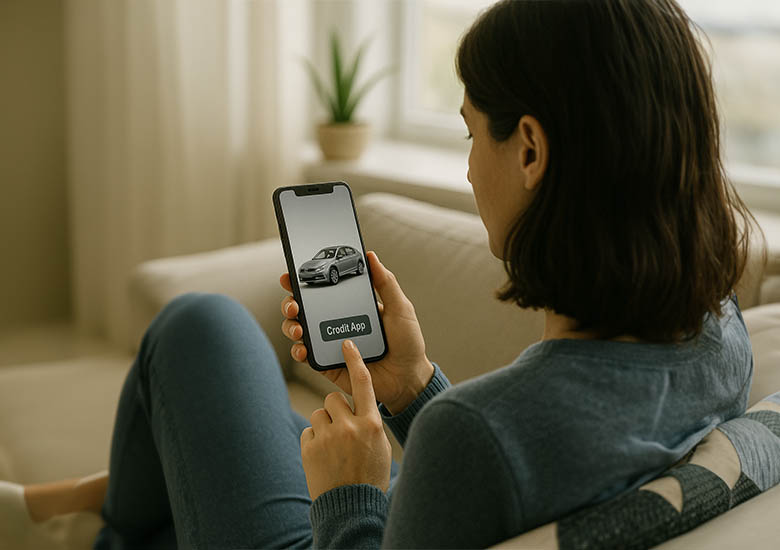
I was talking to a dealer in Florida last month who insisted most of his customers weren't "mobile people." Then we looked at his analytics. Over 65% of his website traffic was coming from mobile devices.
But here's the kicker—his mobile bounce rate was 78%. People were finding his site on their phones, taking one look, and leaving immediately.
Mobile-first design isn't just about making your desktop site work on phones. It's about understanding how people actually use their phones to shop for cars. They're multitasking, they're impatient, and they want immediate answers to simple questions.
Your mobile site needs to load fast, look professional, and make it dead simple to call you, text you, or fill out a quick form.
The technology that matters
You don't need every bell and whistle, but certain integrations make a huge difference:
- CRM connection is non-negotiable. Leads should flow automatically from your website into whatever system you use to manage customers. Our MyOnlineInventory platform helps solve this problem so leads don't get lost. Manual entry is a recipe for lost opportunities.
- DMS integration saves massive amounts of time. Your inventory should update automatically, prices should stay current, and vehicle details should be accurate across all platforms.
- Real financing tools matter more for BHPH dealers than anyone else. Generic auto loan calculators don't work when you're doing in-house financing with different terms and requirements.
The real cost of waiting
Here's what really gets me fired up about this topic. I see great dealers—people who genuinely care about their customers, who provide real value in their communities—losing business to competitors with better websites.
It's not that the competition is better at selling cars or financing deals. They just make it easier for customers to connect with them online.
Take Marcus, who runs three BHPH lots in North Carolina. Smart guy, great reputation locally, but his website looked like it was built during the Clinton administration. Meanwhile, a newer competitor moved in with a slick, mobile-friendly site and started eating into his market share.
Marcus finally pulled the trigger on a website redesign last year. Within six months, his lead volume doubled. More importantly, the quality improved—customers were coming in better informed and more ready to buy.
"I wish I'd done this two years ago," he told me. "I probably lost hundreds of deals trying to save money on my website."
Making it happen
Look, I get it. Website projects feel overwhelming, especially when you're busy running a dealership. But it doesn't have to be complicated.
The dealers who get the best results usually start with a simple audit of what they have now. What's working? What's clearly broken? Where are the biggest opportunities?
From there, it's about prioritizing changes that will have the biggest impact on lead generation. Sometimes that's a complete rebuild. Sometimes it's strategic improvements to what you already have.
The key is understanding your specific market and customers. BHPH customers in rural Alabama have different needs than used car buyers in suburban Dallas. Your website should reflect those differences.
Why this matters more for independent dealers
Franchise dealers have corporate websites, national advertising, and brand recognition working for them. As an independent, your website might be the first impression customers have of your business.
That's actually an advantage if you use it right. You have complete control over your message, your design, and your customer experience. You can move faster than franchise dealers, test new ideas, and create something that truly serves your specific market.
But you have to actually use that freedom. Too many independent dealers end up with websites that look like watered-down versions of franchise dealer sites, instead of something that showcases what makes them different and better.
The bottom line
Your website is either helping you sell cars or helping your competition sell cars. There's really no middle ground anymore.
I've seen too many good dealers struggle because they're trying to compete in 2025 with 2015 technology. Meanwhile, their competitors are capturing leads, pre-qualifying customers, and building relationships online.
The fix isn't complicated, but it does require recognizing that your website is one of your most important sales tools. It deserves the same attention you'd give to your lot layout, your finance office, or your sales process.
Because at the end of the day, every customer who leaves your website without contacting you is a customer who might buy from someone else. And in a business where margins matter and every deal counts, that's a risk you can't afford to take.
Ready to stop losing leads to websites that actually work? Let's talk about what your site could be doing for your business. No generic templates, no one-size-fits-all solutions—just websites built specifically for independent dealers who understand that online success drives offline sales.
Want more dealer leads? Explore our Dealer Websites, Local SEO, and MyOnlineInventory—or talk to Greenlot USA. For more tips, visit the blog.
Learn more about used car dealer technology trends